Artisan Workshops in Umbria: What You'll See and Who You'll Meet
Overview
Umbria is known for traditional crafts including ceramics, hand weaving, typography, woodwork, and wrought iron.
Deruta is especially known for its long tradition of ceramics and hand-decorated pottery.
A workshop visit can offer a closer look at the tools, materials, techniques, and artisans behind a craft.
Deruta, Perugia, and Orvieto are among the Umbrian towns associated with art, craft, and cultural traditions.
Spring and fall offer opportunities to experience Umbria's cultural traditions and seasonal events.
Umbria has a long tradition of handmade craft, including ceramics, textiles, woodwork, ironwork, and more. Deruta is particularly known for its ceramics and centuries-old pottery tradition. Perugia and Orvieto also offer connections to Umbria's artistic, cultural, and craft heritage.
For travelers considering an Umbria artisan tour, a workshop visit offers an up close look at the materials, tools, and techniques behind a finished piece. This guide explores the crafts Umbria is known for, what you may see inside a working studio, and what makes Deruta, Perugia, and Orvieto so special. You’ll also learn when to visit and how artisan workshops can add a deeper connection to the traditions of Umbria. If you are new to the idea of artisan experiences, our guide to artisan tours explains how this approach differs from a standard tour.
The Crafts Umbria Is Known For
Umbria's craft traditions include ceramics, hand weaving, woodwork, ironwork, and paper and printing.Many of these traditions remain part of Umbria’s cultural landscape today, preserved in working studios, museums, and historic workshops throughout the region
Ceramics in Deruta
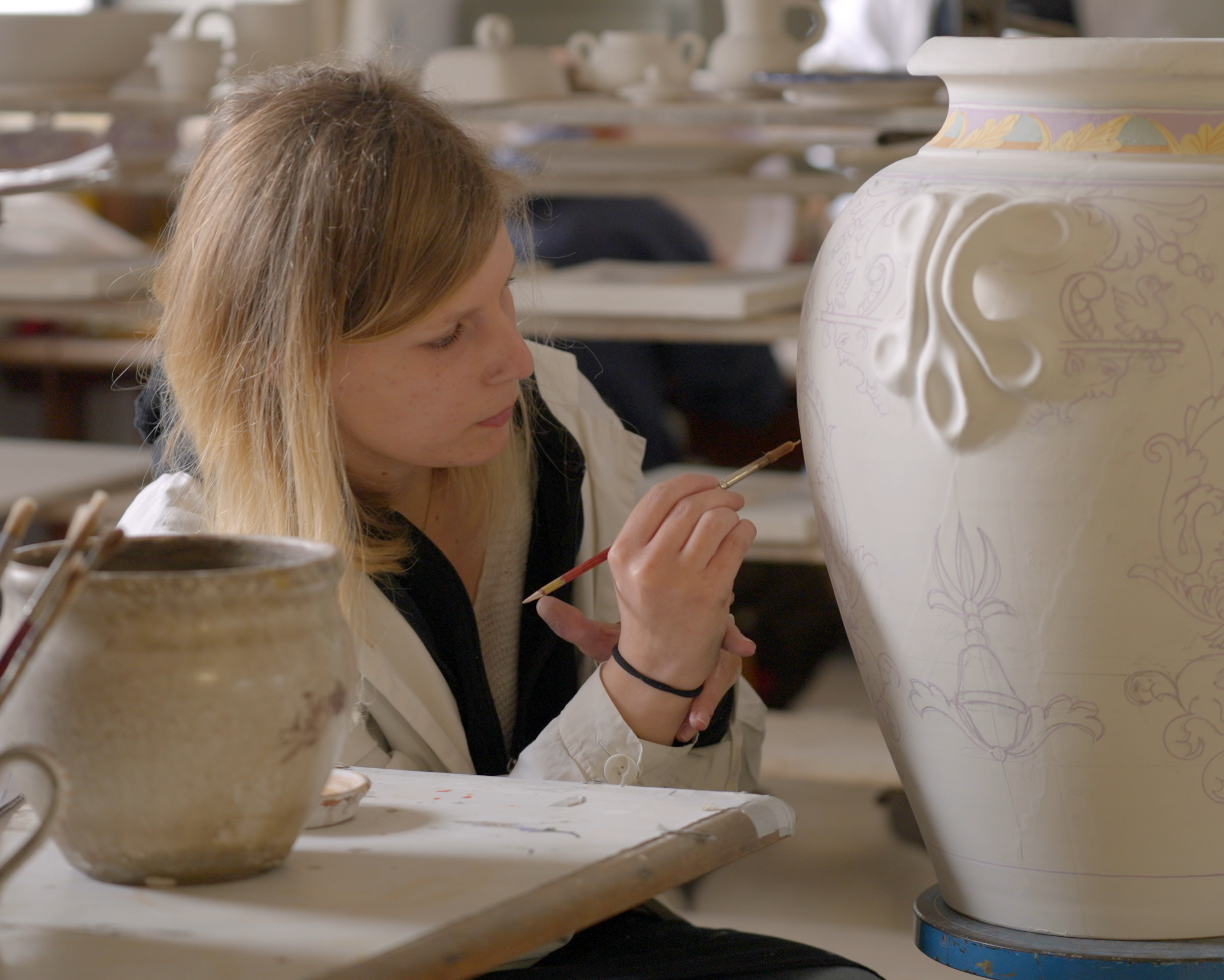
Deruta is one of Umbria's best-known ceramic centers. Written records document pottery production there as early as the 13th century. The town became especially known for its majolica decorated with geometric and floral designs, with Deruta ceramics reaching its peak during the Renaissance.
The Regional Ceramics Museum in Deruta traces this history from the Middle Ages through the 20th century. Local workshops continue the tradition, making Deruta an important place to understand Umbrian ceramics.
Textiles and Hand Weaving
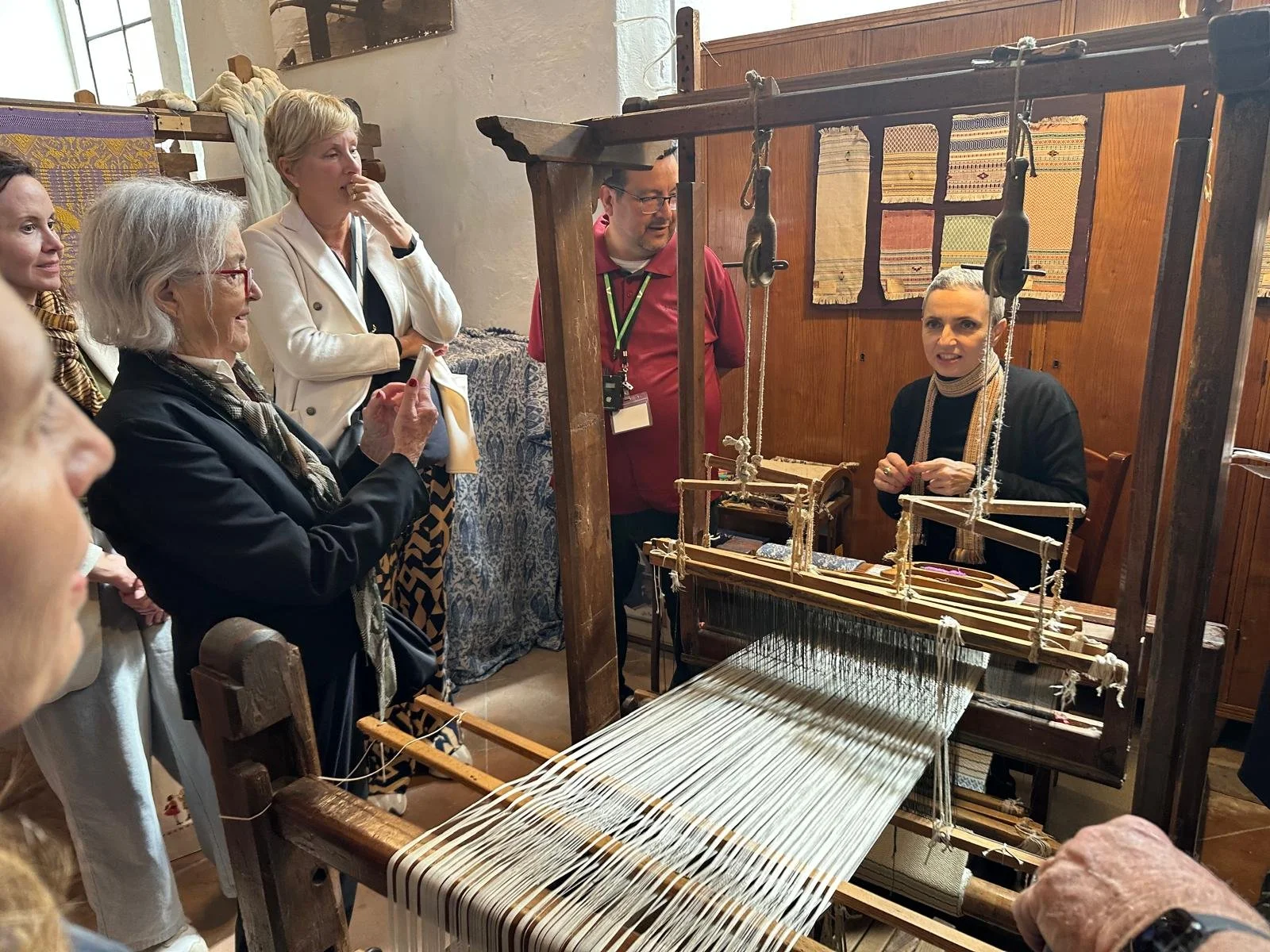
Perugia's medieval weaving tradition continues at the Giuditta Brozzetti Workshop, founded by Giuditta Brozzetti in 1921. Today, her great-granddaughter, Marta Cucchia, and her apprentice create finely made textiles on original working looms from the 18th and 19th centuries.
As you watch them work, the craft becomes tangible: threads are arranged, the shuttle moves through the loom, and each row takes shape by hand. Marta is part of a shrinking group of artisans preserving Perugia's weaving tradition, carrying a craft practiced in the city for generations into the present.
Woodwork and Ironwork
Woodworking has a long history in Umbria, with documented traditions in Perugia. Regional tourism sources highlight local cabinetmaking and wood craftsmanship, including the work of Perugian makers.
Ironwork also has a place in the region's craft history. In Marsciano, artisans continue a traditional method of forging the iron plates used to make cialde, the thin wafers associated with local celebrations. The technique has been preserved by a community of specialized craftspeople.
Paper and Printing
In Città di Castello, Bottega Tifernate is home to a distinctive form of replica art. Siblings Stefano and Francesca run the workshop with their father, Romolo, recreating Italian masterworks using a Renaissance-era technique.
Romolo invented a pictographic machine that helps reproduce the paintings with precision while preserving the character of the original handwork. When you see the process, the connection between the Renaissance technique and the family's work today becomes clear. It is a form of replica art practiced by very few artisans, keeping this unusual tradition alive in Città di Castello.
Inside a Working Studio
A working studio offers a behind the scenes look into a craftIn a ceramic studio, you can follow the process from shaping and drying to decoration and finishing. With hand weaving, the loom, threads, and repeated movements show how a textile takes shape.
The pace is part of the experience. Traditional crafts take time, and the process cannot be reduced to a finished object on display. Watching an artisan work lets you see the tools and techniques behind the final piece. It also leaves room for conversation about the materials, the process, and the tradition behind the work.
That conversation is what makes a workshop visit different from seeing an object in a museum or shop. You meet the person behind the work and can ask about what you are seeing as it happens. For travelers interested in Umbria craft workshops, this is a chance to encounter the region's craft traditions through the people who continue to practice them.
The Towns Worth Knowing
Deruta: Deruta is the place to know for Umbrian ceramics. Pottery has been part of the town's economy for centuries, with records of production dating to the 13th century. The town became especially known for majolica and detailed geometric and floral decoration.
Perugia: Perugia offers a wider view of Umbrian art and craft. The city is home to the Giuditta Brozzetti Hand Weaving Atelier, where traditional hand weaving is practiced on historic looms. Perugia also has a documented woodworking tradition, including cabinetmaking and wood inlay.
Orvieto: Orvieto has a centuries-old ceramic tradition, with medieval majolica becoming especially prominent from the late 13th through the 15th centuries. Artisans worked in brown and green on white enamel, later adding colors such as yellow and cobalt blue.
Together, these towns show the range of Umbria art and craft, from the ceramics of Deruta to Perugia's weaving tradition and the broader artistic heritage of the region. Travelers can learn about how these traditions develop in Umbrian craft workshops.
When to Visit
Spring and autumn are particularly great times to explore Umbria's towns and craft traditions. In spring, Infiorate di Spello fills Spello's streets with intricate floral artworks created for the Corpus Christi celebration. Autumn coincides with the olive harvest and Frantoi Aperti, when participating olive mills across Umbria welcome visitors during the pressing season. These traditions offer another way to understand the relationship between Umbrian communities, their landscape, and the work produced there.
For an Umbria artisan tour, timing also matters when you hope to enter working studios. Artisans work to their own schedules, and some workshop visits need to be arranged in advance. Confirm access before your visit, especially when there is a particular maker or craft you want to see. A well-planned visit leaves time to watch the work unfold, ask questions, and understand the techniques behind it. That unhurried time with the maker is part of what makes visiting an Umbrian workshop worthwhile.
Frequently Asked Questions
What crafts is Umbria known for?
Umbria is known for ceramics, hand weaving and textiles, woodwork, ironwork, and paper crafts. Deruta is particularly known forceramics.
Where are Deruta ceramics made?
Deruta ceramics are made in Deruta, a town in Umbria known for its pottery tradition. The town has a long history of ceramic production and remains closely associated with the craft.
Can you visit artisan workshops in Umbria?
Yes. Artisan workshops can form part of a cultural journey through Umbria. A visit can show you the tools, materials, techniques, and working environment behind a traditional craft.
What is the best time to visit Umbria?
Spring and autumn are good seasons for exploring Umbria's towns and craft traditions. Workshop schedules vary throughout the year, so planned visits should be arranged in advance when needed.
What is the difference between Umbria and Tuscany?
Umbria and Tuscany are neighboring regions with distinct cultural and artistic traditions. Tuscany is widely associated with cities such as Florence and Siena. Umbria is known for historic towns and craft traditions, including Deruta ceramics and regional textile work.
For travelers considering tailor made holidays in Tuscany and Umbria, the two regions offer different settings, traditions, and experiences.
Do you need to speak Italian to visit a workshop?
Not necessarily. It depends on the artisan, studio, and how the visit is arranged. A hosted visit ensures there’s a translator who can explain the craft and the techniques used. You can then learn much more about the work and the person making it.
Visiting Umbria with Made with Love
Made With Love Tours builds its journeys around the people and traditions behind the places you visit. In Umbria, that means meeting artisans, visiting working studios, and experiencing the craft traditions that give the region its character.
The current Italy departure includes Umbria as part of the journey. To see the itinerary and artisan experiences included, explore theItaly Artisan Tour. You can also explore the wider collection ofMade With Love Tours for small group journeys through Europe. To learn more about what makes this approach different, readwhat an artisan tour involves.