What Is an Artisan Tour?
Overview
We started Made with Love Tours because we kept meeting people whose hands could tell a region's whole history — a weaver in a stone cottage, a cheesemaker who'd inherited his grandfather's cave, a ceramicist glazing in a technique passed down six generations. Standard sightseeing rarely brings you into that room. Our tours do.
An artisan tour is a small-group journey — no more than 20 guests — built around time with working artisans rather than a checklist of monuments. You're not moving briskly from one famous facade to the next; you're sitting in a workshop watching a craft take shape, and often talking with the person doing it. That slower pace is the point. It's what lets a place stop being a backdrop and start being a story someone tells you directly.
People sometimes ask how this is different from a food tour. The honest answer: food tours go deep on one thing — the producers, the dishes, the regional flavors — while an artisan tour casts a wider net across craft and culture, with meals and tastings woven in rather than centered. You might spend a morning with a weaver and an evening at a family-run trattoria, both in service of the same goal: understanding how a place makes things, whether that's cloth or dinner.
These trips tend to suit travelers who've already done the big European landmarks and are ready for something quieter and more specific — people drawn to design, heritage, and the craftspeople who carry a tradition forward. A typical day might pair a workshop visit with a meal, some travel between towns, and unstructured time to wander, though the actual rhythm shifts with the itinerary and the destination.
Right now that means Italy, Ireland, and Spain — ceramics in one region, weaving in another, food traditions that vary town to town. What ties it all together isn't the itinerary so much as the people: the ones still doing the work, by hand, the way it's always been done.
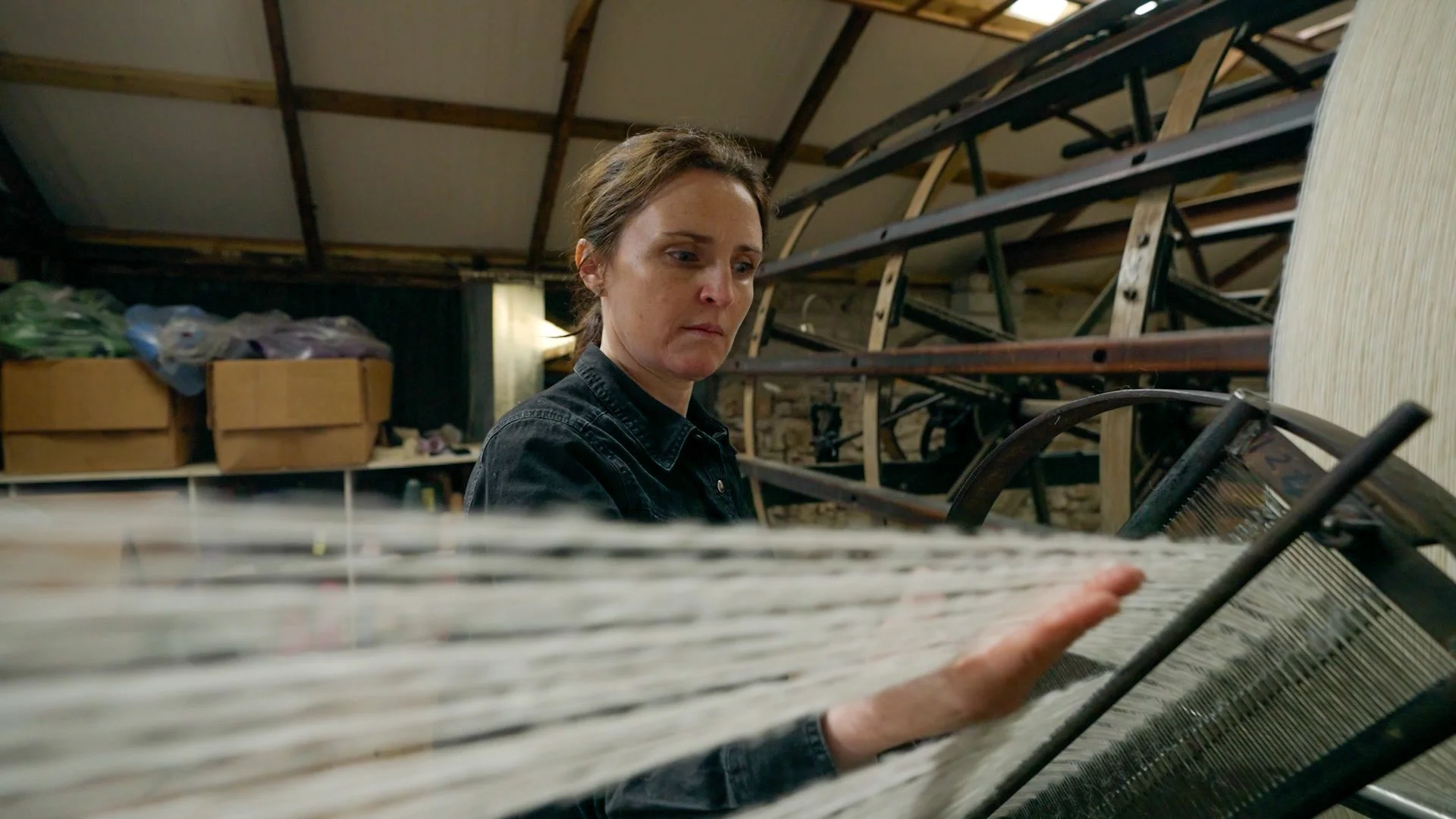
Quality control is everything. Miriam Cushen, CEO of Cushendale Woolen Mills, carefully examines the wool coming off the carding machine.
What Happens on an Artisan Tour
The artisan and their workshop are the heart of the thing. You're not ticking through a list of attractions — you're spending part of a morning inside a working studio, watching a weaver's hands move at the loom, or a maker turn a shapeless lump of clay into something with intention. What matters isn't the finished piece so much as the techniques, the passion, and the thousand small decisions that got it there.
That human context is everything. In Perugia, Marta Cucchia leads hand-weaving experiences at the Giuditta Brozzetti Workshop, set inside a 12th-century church she converted into her studio — looms standing where pews once did. In Umbria, the Bianconi family carries on a truffle-hunting tradition five generations deep. Meeting people like this changes what the craft means to you — you're not just seeing an object, you're hearing how it shaped a place, and who kept it alive long enough for you to witness it.
Sometimes you get to do more than watch. Depending on the artisan and the craft, guests may get their hands in it too — though that's never guaranteed, and it isn't really the point. The point is understanding how something is made, and why someone still gives their life to making it that way. It's the difference between admiring a finished piece in a shop window and standing in the room where it came from, surrounded by the tools, the materials, and the knowledge that made it possible.
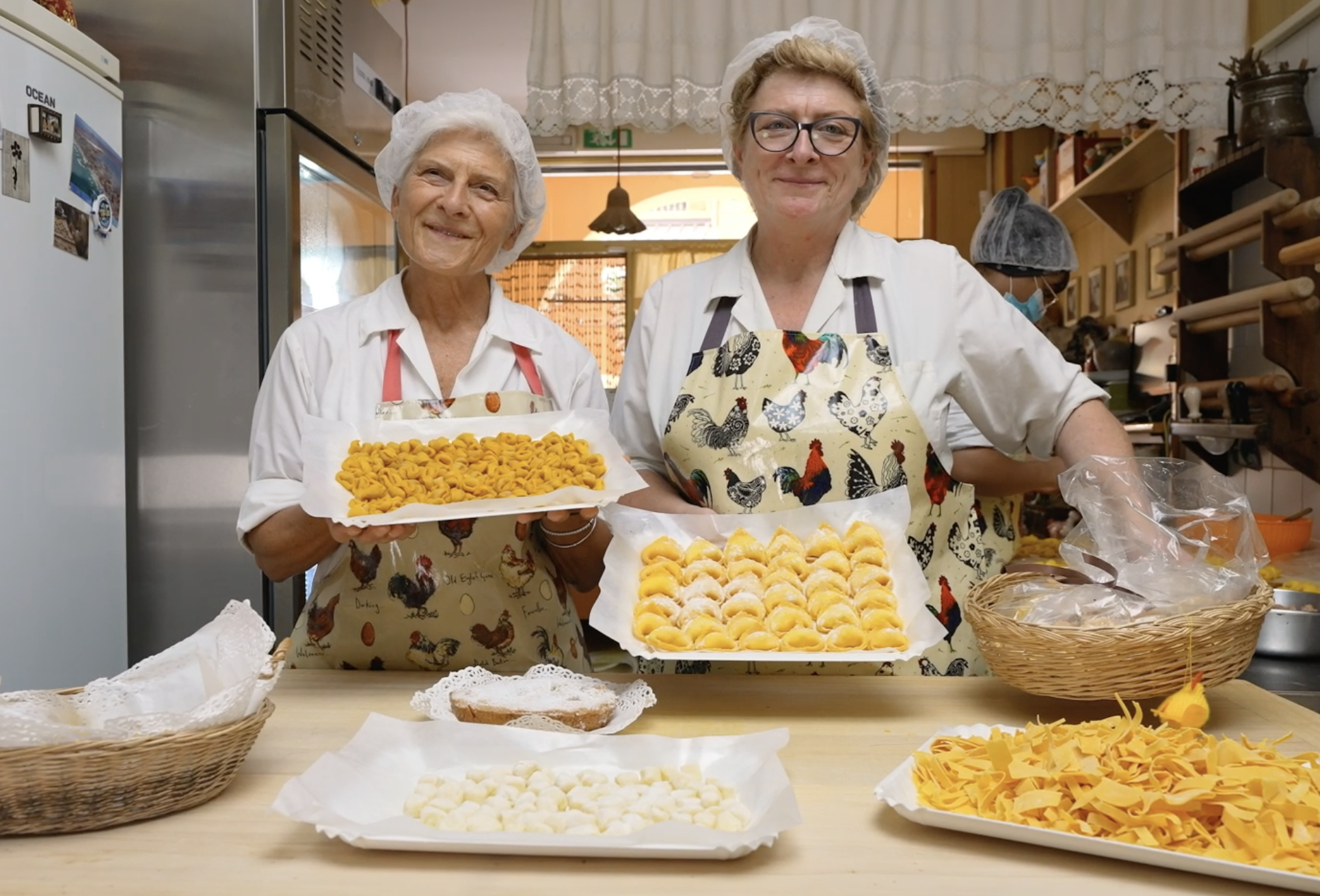
Sisters Monica and Dani have been rolling handmade tortellini and tortelloni since they were girls, taught at their grandmother's side. Today their pasta remains one of Bologna's most iconic foods.
How It Differs From a Standard Tour
A standard tour hits the highlights — the big sights, the museums, the neighborhoods every guidebook tells you not to miss. Our artisan tour is built differently. It's experiential from the ground up: you're not watching a place from the outside, you're in it — sitting down with locals, eating at the small, off-the-beaten-path spots they'd actually recommend, and access to studios and workshops that don't otherwise open their doors to visitors. The people making things, and the traditions they've kept going, aren't a stop on the itinerary — they are the itinerary.
| Feature | Standard Tour | Artisan Tour |
|---|---|---|
| Group size | Often larger groups | Limited to 20 guests |
| Pace | Moves between several sights and stops | Allows more time at individual experiences |
| Focus | Landmarks, museums, and major attractions | Artisans, workshops, and craft traditions |
| Access | Public attractions and scheduled sightseeing | Workshops, studios, farms, kitchens, and family tables |
| Artisan interaction | May be limited | Time to meet makers and hear about their work |
| Experience | Primarily sightseeing | Demonstrations and hands-on experiences where offered |
| What you take home | An overview of the destination | A closer understanding of the artisans,regions and culture |
The difference becomes clear when you step into a working studio. In Perugia, you can watch Marta Cucchia use traditional weaving techniques at the Giuditta Brozzetti Workshop. In Florence, Paolo Penko demonstrates the goldsmith's craft. In Seville, Jesus Rosado opens the door to flamenco dress making. These are not simply stops to see. They are opportunities to spend time with people who shape a region's culture.
The pace also changes what you remember. You might learn pasta-making at Le Sfogline, watch Natalie Surina demonstrate traditional harp-making at Ériú Harps, or see Francisco Javier González work on gold gilding. You hear how the work is done and see the materials and techniques up close. The finished piece then has a story behind it. You know something about the hands, skill, and tradition that went into making it.
How It Differs From a Food Tour
Food tours and artisan tours can overlap because food is part of a region's culture. Both can introduce travelers to the people, skills, and traditions behind what they encounter. The focus is different:
Food tours: Ingredients, dishes, producers, markets, restaurants, vineyards, and culinary traditions.
Artisan tours: Ceramics, textiles, printing, woodworking, metalwork, and other traditional crafts.
Both: Time with the people who preserve and practice these traditions.
The experience reflects that difference. A food tour may explore how a regional ingredient is grown, prepared, or served. An artisan tour may take you into a working workshop to watch a craftsperson shape clay, weave fabric, or work with metal. This is the distinction behind craft tours and other forms of artisan travel. The focus is on the people and techniques behind a tradition, rather than simply moving between attractions. The Italy Food Tour focuses on Italian food and culinary traditions, while an artisan tour follows the wider story of making and the knowledge passed through generations.
Who are Artisan Tours for?
Artisan tours suit travelers who want to know how something is made, not simply see the finished piece. They are a good fit for travelers who may have already seen the major sights and want a quieter way to spend time in a place. The focus is on the craft, the person who practices it, and the knowledge behind the work.
For a traveler who has already visited the Colosseum or spent time in Florence, an artisan tour offers a different kind of experience. You might watch Marta Cucchia demonstrate traditional weaving at the Giuditta Brozzetti Workshop in Perugia. You might meet Paolo Penko in Florence and see his goldsmith work up close. These encounters leave room for questions and conversation. They also give you time to understand how a technique is practiced and passed on to the next generation.
Artisan tours are less suited to travelers who want to cover as many landmarks as possible in a day. They are not built around a checklist of famous sights. Artisan travel asks for more time with fewer subjects. If your interest lies in craftsmanship, people, and the stories behind the things they make, that pace may be exactly what you are looking for.
Frequently Asked Questions
What is an artisan tour?
An artisan tour is a small group travel experience centered on working artisans, their workshops, and the traditional skills they practice. Instead of focusing only on major attractions, the itinerary gives travelers time to meet makers and experience a region in a whole new way.
How big are the groups on an artisan tour?
Artisan tours are designed for small groups, typically with no more than 20 guests. This allows the group to visit working workshops, watch demonstrations, and spend time with the artisans.
Do you get to make things yourself?
Sometimes. Hands-on activities are available when the individual artisan and workshop offer them. The focus remains on understanding the craft, its materials, and the techniques used to make it.
What is the difference between an artisan tour and a food tour?
A food tour focuses on culinary traditions, including ingredients, producers, dishes, wine, and regional food culture. An artisan tour has a broader craft focus. It can include weaving, ceramics, printing, woodworking, metalwork, and other traditional skills, while offering some tastings and cooking demonstrations.
Are artisan tours suitable for solo travelers?
Yes. Solo travelers can join a small group and share the experience with other guests who have an interest in craft, culture, and local traditions. The workshops and time with artisans also provide natural opportunities for conversation.
How far in advance should you book?
Booking ahead is important when an itinerary depends on specific artisans, workshops, or other scheduled experiences.
Where We Travel
Made With Love Tours brings its artisan travel approach to Italy, Ireland, and Spain, with Portugal and France departures being added soon. Each destination features unique makers, materials, techniques, and cultural traditions. In Italy, the experience can include working artisan workshops and time with craftspeople where they work. Ireland and Spain offer makers and traditions beyond the usual sightseeing route.
For those interested in craft tours in Italy, the Italy Artisan Tour explores working crafts and the people behind them. The Ireland Tour and Spain Tour offer experiences with local makers and living traditions, shaped by each country's character. The full collection of tours shows the destinations and journeys currently available.