Artisan Traditions of Tuscany: Florence’s Hat Makers, Goldsmiths, Leatherworkers and More
Overview
Tuscany has a rich artisan heritage, with Florence at the center of traditions including goldsmithing, leatherworking, perfumery, hat making, frame making, and Florentine mosaic.
The town of Signa, just outside Florence, has long been associated with Tuscany’s straw hat industry and remains home to the Grevi family hat-making tradition.
Florence’s goldsmiths and leatherworkers continue techniques passed through generations, often in family-run workshops.
Florentine perfumery has roots in the Renaissance and the court of Catherine de’ Medici.
Commesso, or Florentine mosaic, is a highly detailed technique in which carefully selected pieces of stone are cut and fitted together by hand to create intricate images.
Visiting working workshops offers a closer look at the people, materials, and techniques behind Tuscany’s artisan traditions.
Tuscany’s artisan traditions are closely tied to the history of Florence and the surrounding towns. For centuries, craftspeople here have worked with leather, precious metals, stone, straw, wood, and fragrance, developing skills that became part of the region’s identity.
Many of these traditions remain alive in family-run workshops today. Hat makers in Signa continue a craft that helped make the town famous, while in Florence, goldsmiths, leatherworkers, perfumers, frame makers, and mosaicists carry techniques forward through new generations.
This guide looks at some of the artisan traditions that help define Tuscany, the makers preserving them, and the workshops where these crafts can still be experienced firsthand.
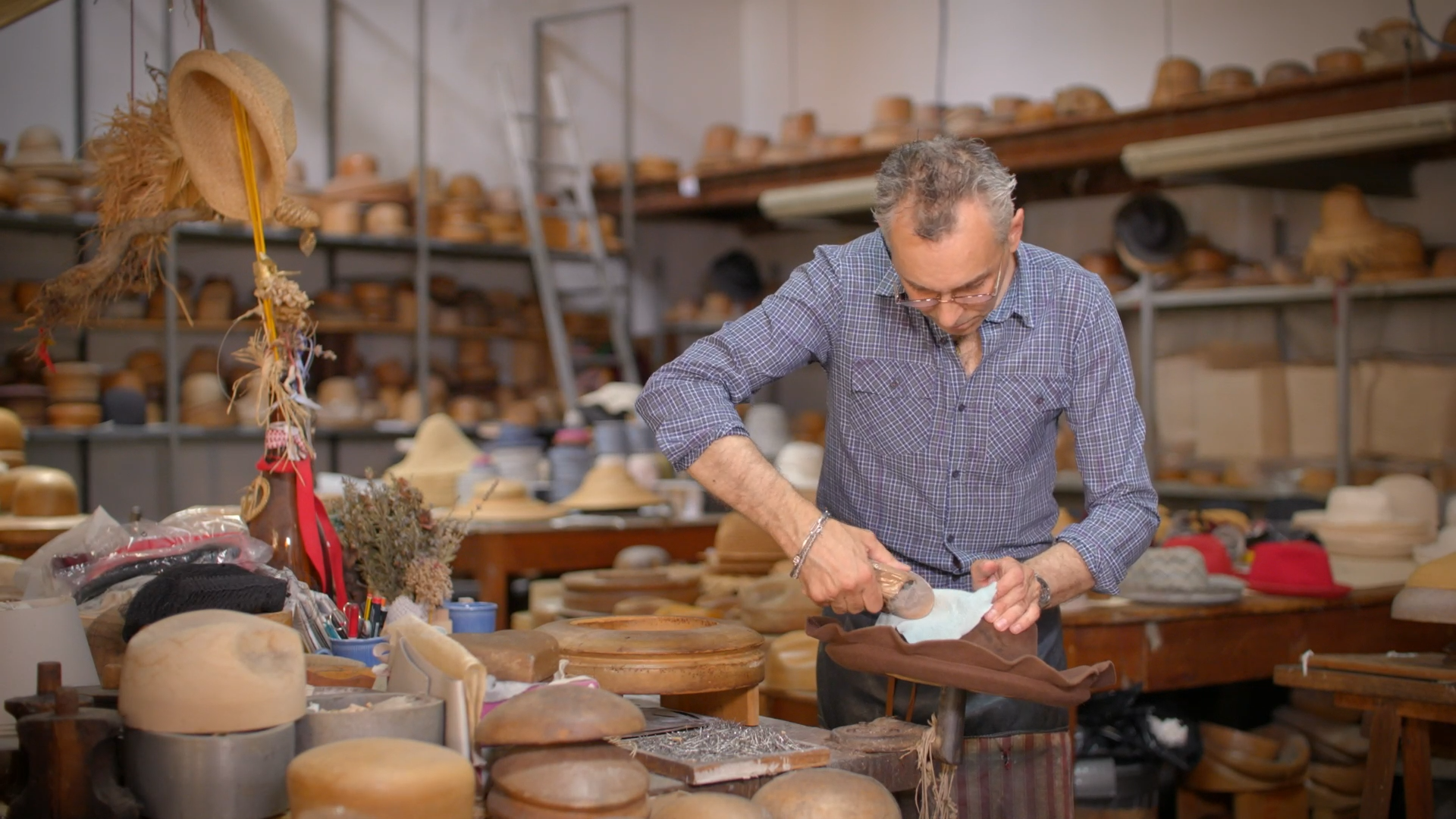
Hat Making in Signa
Just outside Florence, Signa has an important place in Tuscany’s history of straw hat making. The area became closely associated with the production of straw hats, a tradition that connected local craftsmanship with fashion far beyond Tuscany.
The Grevi family has been part of that story since 1875. Today, siblings Giuseppe, Roberta, and Sylvana continue the family business, adapting their designs as fashions change while preserving the craftsmanship behind each hat.
Over generations, Grevi hats have traveled far beyond Tuscany and have even appeared in films. Yet the family’s connection to Signa remains central to its story, offering a glimpse into how a regional craft can evolve without losing its roots.
Florentine Goldsmithing and Jewelry
Goldsmithing has a long history in Florence, and the city remains home to artisans who create jewelry by hand using skills passed from one generation to the next.
Master goldsmith Paolo Penko learned the craft from his father before deepening his training at the Art Institute of Florence. There he met his wife, Beatrice, an expert gemologist. Today, their sons Alessandro and Riccardo are also part of the family tradition.
The family creates one-of-a-kind jewelry, with designs frequently inspired by Florence itself. Architectural details, historic forms, and centuries of Florentine decorative arts find their way into pieces made using traditional goldsmithing techniques.
For travelers, seeing a working goldsmith’s studio adds another dimension to Florence’s artistic history. Rather than encountering craftsmanship only in museums, you can see how those traditions continue in the hands of contemporary makers.
Florentine Mosaic and the Art of Commesso
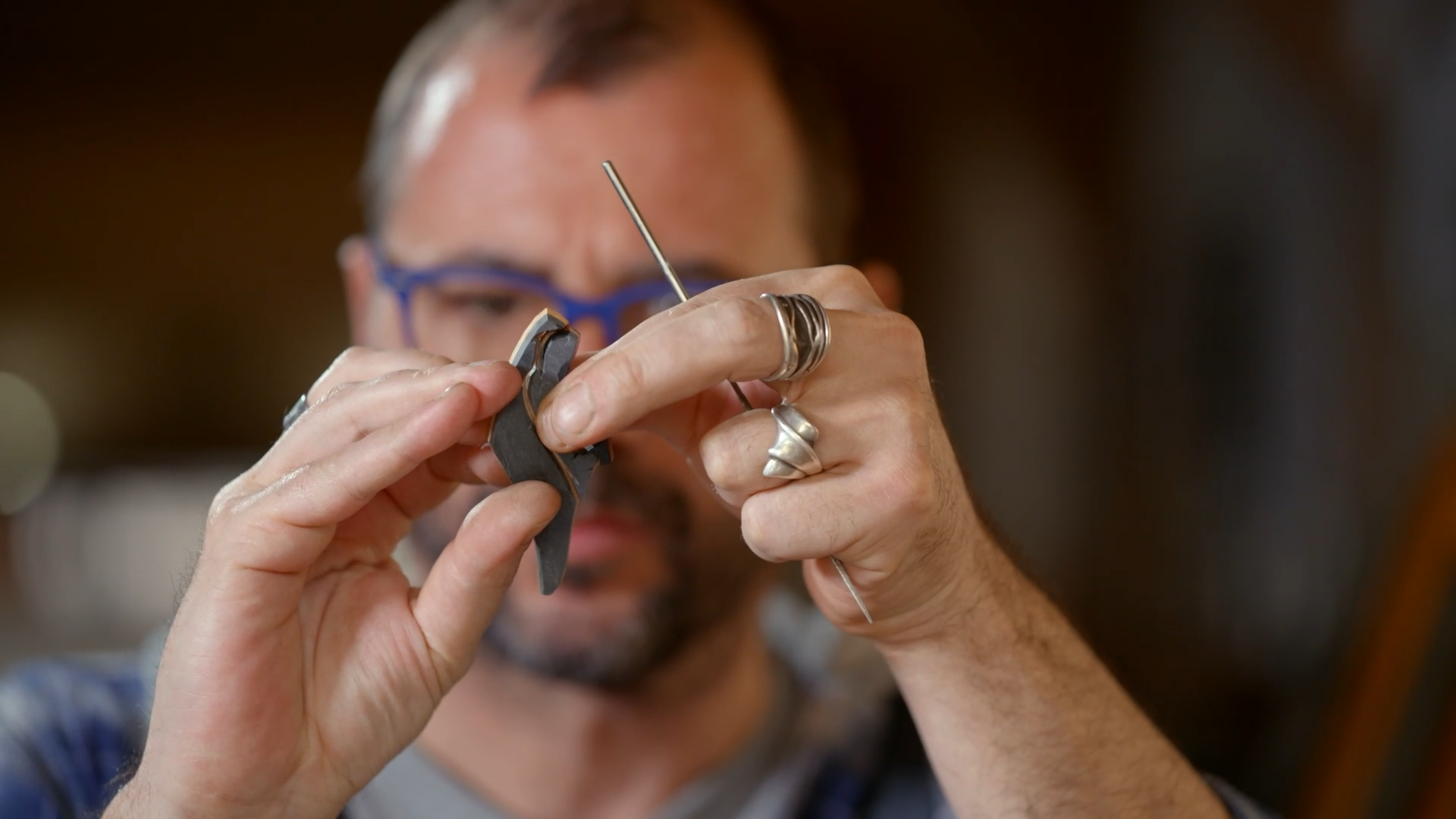
One of Florence’s most distinctive artisan traditions is commesso, commonly known as Florentine mosaic. Rather than using small tiles in the manner of many mosaics, artisans carefully select, cut, shape, and fit pieces of stone together to form detailed images and patterns.
Brother and sister Catia and Leonardo Scarpelli continue this tradition in the workshop established by their father, Renzo, in downtown Florence in 1972.
Creating a piece begins with the design and selection of stones. The natural colors, patterns, and variations within each stone become part of the finished image. Individual pieces are then shaped and fitted together with remarkable precision. Depending on the complexity of the design, a single work can take months to complete.
Seeing the process makes clear how much of the artistry happens before the finished mosaic emerges. Choosing exactly the right section of stone can be as important as cutting it, requiring the artisan to understand both the material and the image it will eventually become.
The Towns Worth Knowing
Florence: The center of many of Tuscany’s best-known artisan traditions, from goldsmithing and leatherworking to perfume, frame making, and commesso. The city’s workshops offer a living connection to the artistic traditions associated with Florence for centuries.
Signa: Located just outside Florence, Signa has a longstanding connection to Tuscany’s straw hat industry. The tradition survives through makers such as the Grevi family, whose hat-making history dates to 1875.
Oltrarno: Across the Arno from Florence’s historic center, the Oltrarno has long been associated with workshops and artisan trades. It remains an important area for travelers interested in Florence’s working craft culture.
Taken together, these places and workshops reveal a side of Tuscany shaped not only by Renaissance masterpieces, but by generations of working artisans.
Frequently Asked Questions
What is Tuscany known for?
Tuscany is known for a wide range of traditional crafts, including leatherworking, goldsmithing and jewelry, ceramics, stonework, textiles, hat making, frame making, and Florentine mosaic. Florence in particular has a long history of specialized artisan workshops.
What traditional crafts is Florence known for?
Florence is especially associated with goldsmithing, leatherwork, perfumery, decorative arts, handmade frames, and Florentine mosaic. Many of these crafts developed alongside the city’s artistic and commercial history and continue in working workshops today.
ceramic whistle figures.
What is Florentine mosaic?
Florentine mosaic, or commesso, is a technique that uses carefully selected pieces of stone to create detailed images and decorative designs. Artisans cut and shape individual stones before fitting them together with great precision. The natural colors and patterns of the stone become part of the finished image.
Is Tuscany worth visiting?
Tuscany is especially worth visiting for travelers interested in art, history, food, landscapes, and traditional craftsmanship. Florence offers world-renowned Renaissance art and architecture alongside working artisan traditions in goldsmithing, leather, perfume, mosaic, and other decorative arts, while the surrounding Tuscan countryside adds historic towns, vineyards, and rolling landscapes.
Travelling With Made with Love
Made With Love Tours builds small group journeys around the people, crafts, food traditions, and places that give each region its character. Time with an artisan can show you how a material is shaped, how a technique is preserved, and why a particular craft belongs to that place. These encounters sit alongside the history, food, and landscapes that define each journey.
To experience Tuscany with Made With LoveTours, explore the current artisan-focused itinerary and visit the Italy Artisan Tour. You can also browse the wider collection of Made With Love Tours for small group journeys through Europe.