

Cinque Terre and the Artisan Heart of Liguria
Cinque Terre draws travelers to its five villages, steep coastal slopes, and views across the Ligurian Sea. Yet the region is also shaped by the people who work with their hands. In Monterosso, Mila Celsi and Francesco Roberts have made handmade ceramics at Fabbrica d'Arte Monterosso since the 1980s. Along the coast, Francesco Topazio carries on his family's boatbuilding tradition at Cantiere Navale Topazio, where Ligurian gozzo boats are built and repaired.
These are the stories that can be missed when a Cinque Terre tour focuses only on the highlights. Looking closer reveals a region where ceramics, boatbuilding, and other skilled traditions remain connected to the places and people of Liguria.
The Villages of Cinque Terre, Through an Artisan Lens
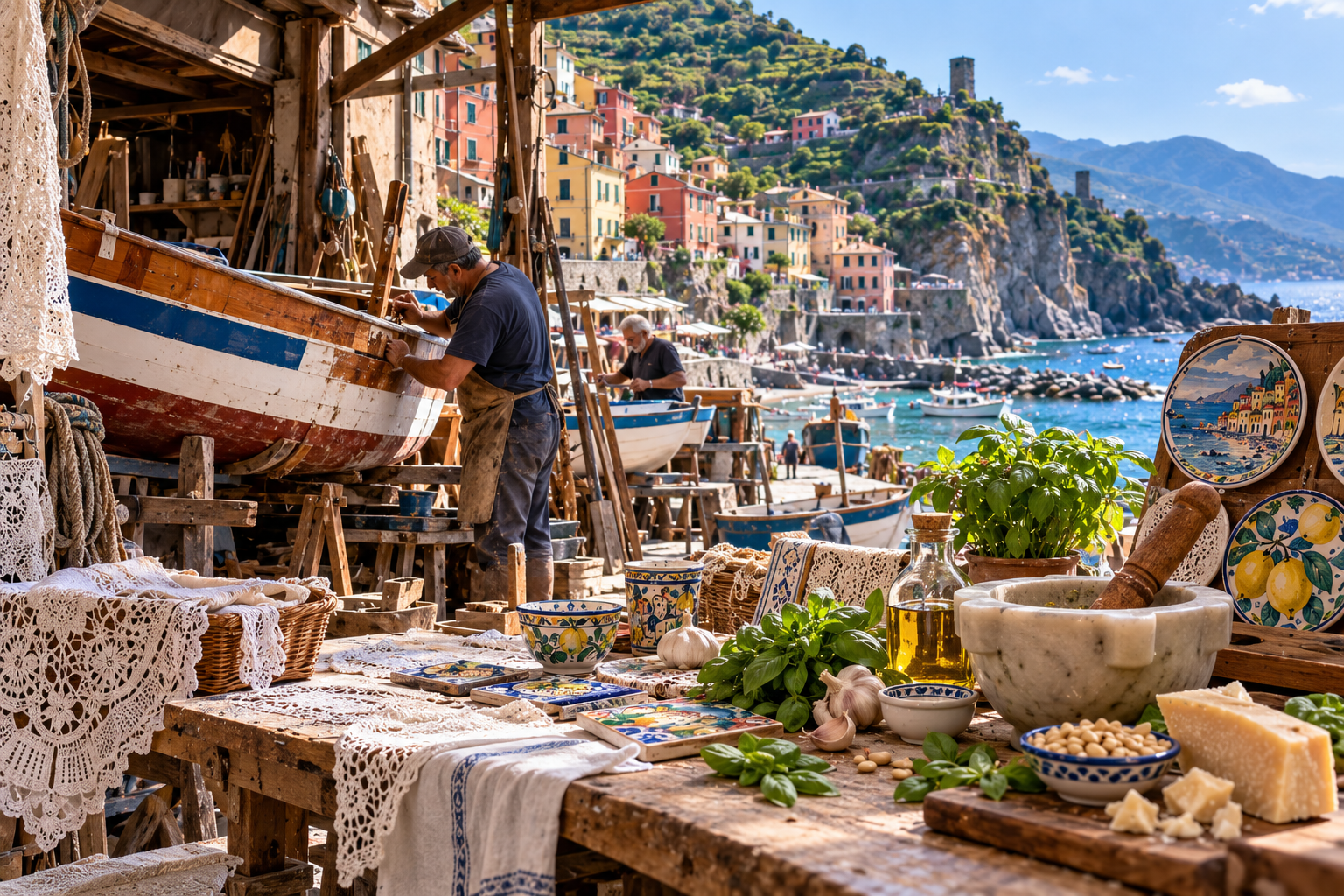
Cinque Terre is known for its five villages and the coastline that connects them. But the region's character is also reflected in the crafts and food traditions that developed along the Ligurian coast.
Ligurian olive oil is closely tied to the region's olive-growing traditions. Pesto is another local specialty, made with basil, garlic, pine nuts, cheese, and olive oil. Lacework reflects a different kind of skill, with intricate patterns produced by hand. Along the coast, boatbuilding grew from the practical needs of fishing communities and maritime life.
These traditions offer a different way to look at Cinque Terre. The villages are not simply places to photograph or pass through. Their food, materials, and handmade crafts provide a closer connection to the work and traditions that have shaped life along the Ligurian coast.
Beyond Cinque Terre: Liguria's Broader Craft Traditions
Cinque Terre is only part of Liguria's cultural story. Beyond the five coastal villages, the region is also known for traditions connected to food, agriculture, and handmade production. These traditions offer a different way to understand the landscape surrounding the coast.
Olive Oil and the Ligurian Landscape
Olive cultivation is an established part of Ligurian agriculture, shaped by the region's hilly terrain. Olive groves occupy terraces along the coast and inland slopes, where the cultivated land follows the contours of the hills.
Ligurian olive oil is known for its local olive varieties, including Taggiasca in western Liguria. Riviera Ligure DOP extra virgin olive oil is produced in three designated areas: Riviera dei Fiori, Riviera del Ponente Savonese, and Riviera di Levante. The designation reflects the connection between the oil and its specific place of production.
Pesto Genovese
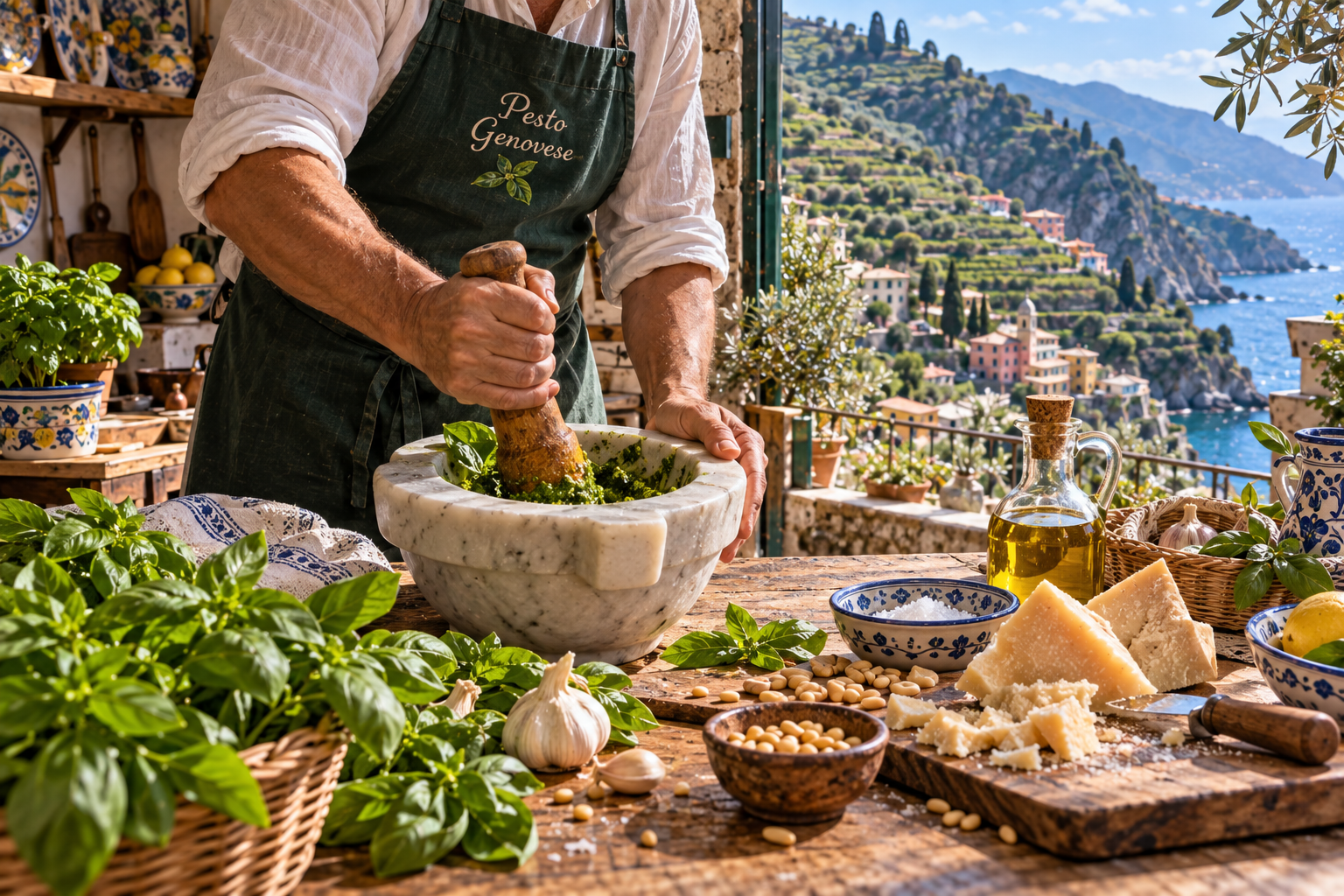
Pesto Genovese is another tradition closely associated with Liguria. Its defining ingredient is Genovese Basil DOP grown in the region.
The traditional ingredients include basil, garlic, pine nuts, hard cheeses, extra virgin olive oil, and salt. Pesto is traditionally prepared using a marble mortar and wooden pestle, connecting the finished dish with a method that has long been part of Genoese food culture.
For travelers exploring beyond Cinque Terre, these traditions add another layer to a visit to Liguria. They show how the region's landscape and local ingredients have shaped the food people continue to prepare and enjoy today.
Frequently Asked Questions
What is Liguria known for besides Cinque Terre?
Liguria is known for Riviera Ligure DOP olive oil, Taggiasca olives, and Pesto Genovese. Pesto Genovese is traditionally made with Genovese Basil DOP, Riviera Ligure DOP extra virgin olive oil, pine nuts, garlic, Parmigiano Reggiano DOP, Fiore Sardo DOP, and coarse salt. Liguria also has established traditions in lacework and boat building.
Are the Cinque Terre villages very crowded?
Visitor numbers can be high during the summer months during high season. The Cinque Terre National Park monitors attendance levels and uses crowd-management measures on particularly busy days. Regional trains stop at Riomaggiore, Manarola, Corniglia, Vernazza, and Monterosso al Mare, connecting all five villages.
Who is the Italy Artisan Tour designed for?
The Italy Artisan Tour is designed for travelers interested in Italian craftsmanship, food, and cultural traditions. The small-group journey through Umbria and Tuscany is built around working workshops, studios, kitchens, and tasting rooms. It suits travelers who want to spend time with artisans and see the skills behind the work.
Explore the Italy Artisan Tour
Meet the artisans, cooks, and makers featured on Made With Love’s journey through Umbria and Tuscany. Spend time in working workshops, kitchens, studios, and tasting rooms, and see the skills behind the food and craftsmanship of these regions. Meet the artisans and explore the Italy Artisan Tour through Umbria and Tuscany.
Discover the small-group journeys and artisan stories behind Made With Love Tours.
