

Venice Beyond the Postcard: An Artisan's View of the City
Venice is known for its canals and palazzi, but the city’s history is also rooted in skilled craft. On Murano, glassmakers developed techniques that became central to Venetian glassmaking. On Burano, lace-making became an important local tradition, with the island’s lace school opening in 1872. These crafts remain an important part of Venice’s cultural history.
For travelers interested in Venice’s artisan traditions, looking at the city through its artisans offers a unique perspective. The focus shifts from simply seeing Venice’s tourist sites to understanding the culture behind some of its best-known traditions. Glassblowing, lace-making, and mask-making each reveal a different part of the city’s craft history and the people who carry on these traditions.
The Artisans Behind Venice's Most Famous Crafts
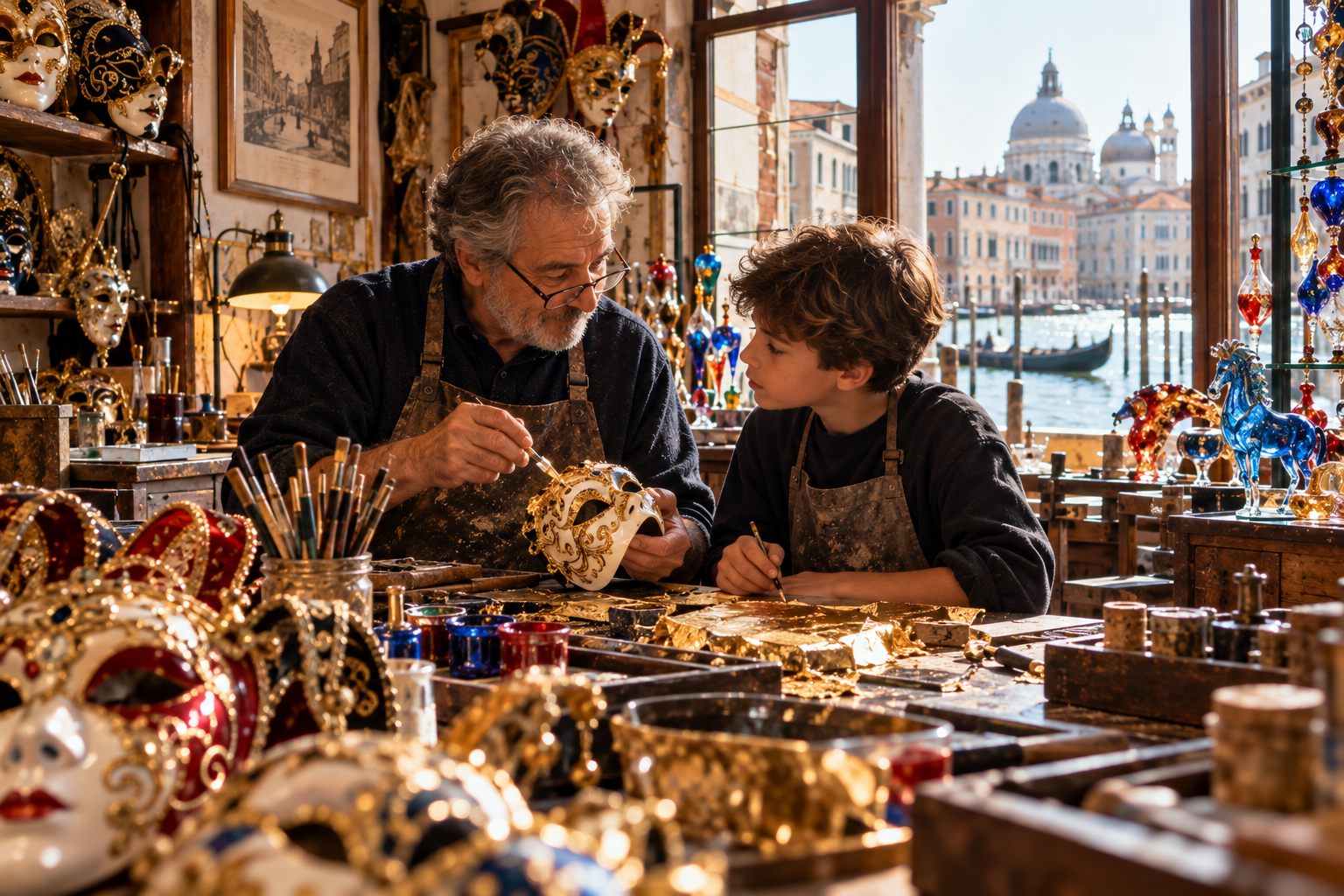
Venice's craft traditions have been practiced by families and individual artisans across the city and the surrounding islands for generations. Made With Love's Venice stories introduce travelers to makers working in glass, masks, and marble paper.
Murano Glassmaking
Davide Salvadore is an 11th-generation glassmaker in Murano. He began as an apprentice six decades ago, learning the craft from his grandfather. Today, his son Marco Salvadore, a 12th-generation glassmaker, works alongside him and helps bring Davide's sculptures to life.
The Salvadore family offers a direct connection to Murano's glassmaking tradition. The craft has been passed down through generations of the family, with each generation bringing their own spin on this craft.
Venetian Mask Making
Stefano Gottardo is a master mask maker in Venice. The process is shared within the family. After Stefano creates the masks, his sister Manuela and wife Eliana decorate them. Their work includes painted patterns and 24-karat gold leaf, giving each mask its own design and finish.
The result is a beautiful handcrafted piece rather than your standard Venice souvenir.
Marble Paper Making
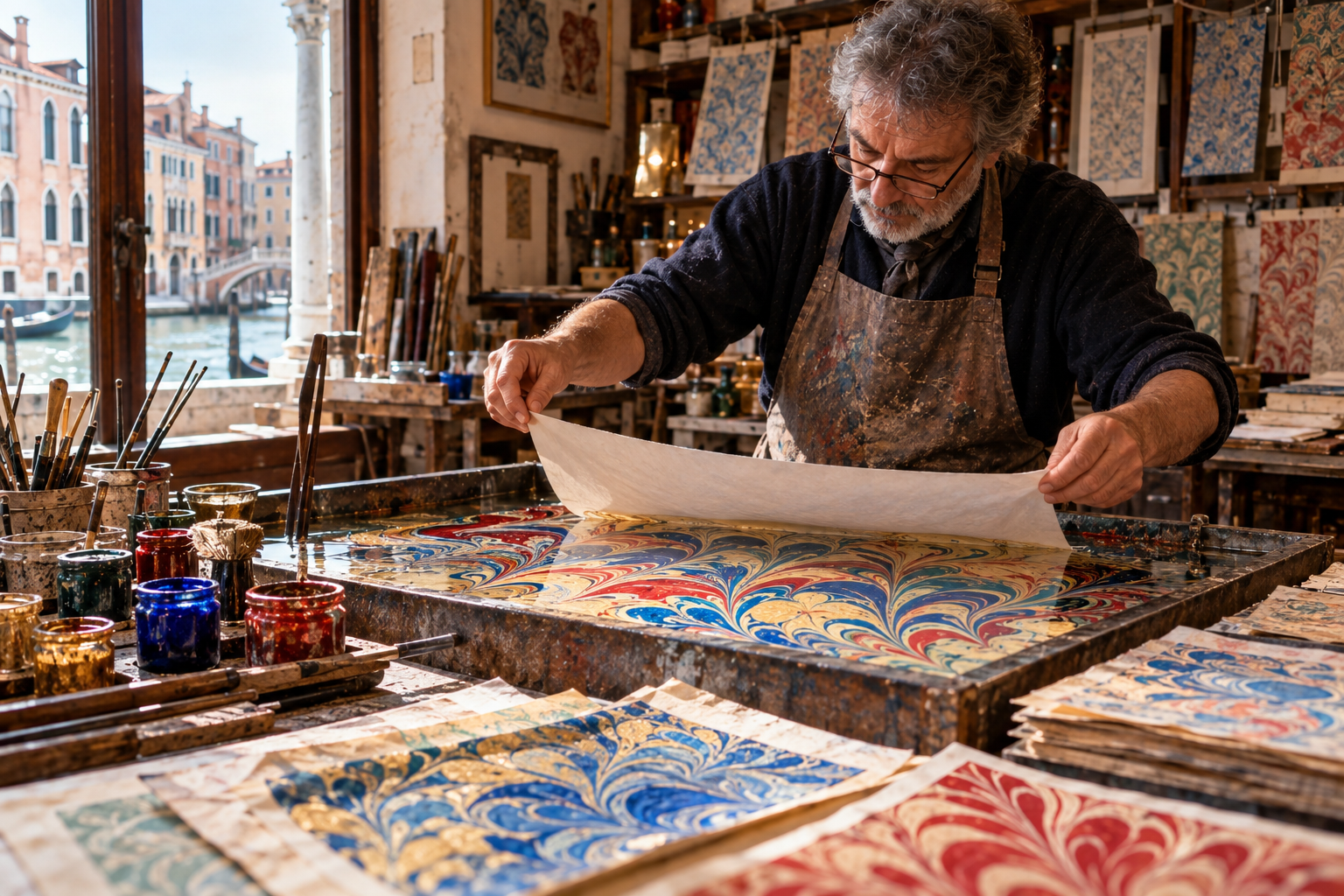
Alberto Valese works in Venice with the traditional craft of marble paper making. The technique first came to Italy through Venice in the 16th century. Inspired by an old manual on the process, Alberto taught himself the craft and worked to revive it in Venice.
His process begins with paint. He creates a pattern on the surface, then gently lays paper over it to capture the design. Alberto also experiments with the technique to develop his own patterns.
Frequently Asked Questions
What artisan traditions is Venice known for?
Venice is known for several long-standing craft traditions, including Murano glassmaking and Venetian mask making. Murano glassmaker Davide Salvadore comes from an 11-generation glassmaking family and continues that tradition through his work.
Is Murano worth visiting during a Venice trip?
Yes, especially for travelers interested in crafts and Venetian glassmaking. Davide Salvadore learned the craft from his grandfather and is an 11th-generation glassmaker. His son Marco Salvadore is now part of the 12th generation.
Does the Italy Artisan Tour include Venice?
No. The current Italy Artisan Tour focuses on Umbria and Tuscany. Guests meet artisans such as Marta Cucchia at the Giuditta Brozzetti weaving workshop in Perugia and visit L'Antica Deruta in Deruta.
Explore the Italy Artisan Tour
If you want to experience Italy through the people who keep its traditions alive, continue your journey beyond Venice and discover the artisans, workshops, and stories found across Umbria and Tuscany. Explore the Italy Artisan Tour to meet the makers and discover the traditions behind their work.
