Inside Ireland's Living Crafts: The Artisans Behind the Made With Love Tour
Introduction
Every Made With Love journey is shaped as much by the people as the places. On the Ireland Artisan Tour, guests don't simply admire handcrafted objects from behind a display case. They enter working studios, farms, and family businesses to meet the people whose skills, materials, and stories carry Ireland's craft and cultural traditions forward.
From a pottery session with Brenda McGinn at Busy Bee Ceramics in County Monaghan to harp-making with Natalie Surina of Ériú Harps at Aughnanure Castle and a visit with Philip and Miriam Cushen at their six-generation woollen mill in Graiguenamanagh, each encounter reveals a different side of Ireland's living traditions.
Guests also meet jewelry designer Martina Hamilton in Sligo, oyster farmer Aisling Kelly Hunter, and beekeeper Ailbhe Gerrard in Tipperary, learning how coastline, land, family, and place shape their work. These conversations turn the itinerary into more than a sequence of landmarks, offering a closer understanding of how craft, land, family, and regional identity remain connected across Ireland.
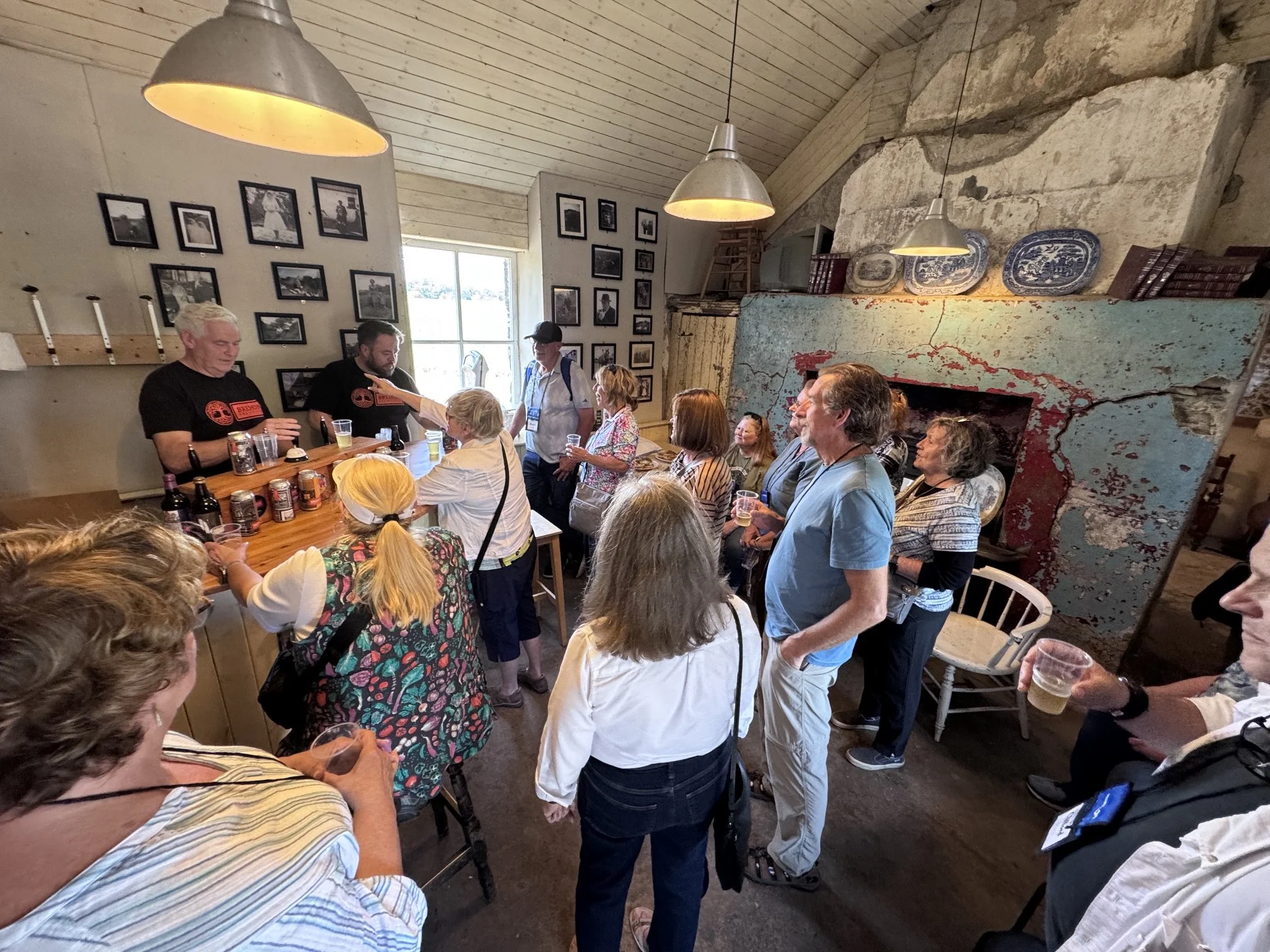
Meet Some of the Artisans Behind the Ireland Tour
The Ireland Artisan Tour introduces guests to makers, farmers, and producers working across ceramics, jewelry, oyster farming, harp-making, beekeeping, and woollen textiles. The profiles below offer a closer look at four of those encounters: Brenda McGinn at Busy Bee Ceramics, Aisling Kelly Hunter and her family with Sligo Oyster Experience, Philip and Miriam Cushen at Cushendale Woollen Mills, and jewelry designer Martina Hamilton. Elsewhere on the journey, guests also meet Natalie Surina of Ériú Harps and Ailbhe Gerrard at Brookfield Farm.
Busy Bee Ceramics, County Monaghan
At Busy Bee Ceramics in County Monaghan, guests meet ceramic artist Brenda McGinn for a hands-on introduction to working with clay. The visit brings travelers into Brenda's creative space, where they begin to understand pottery through the feel of the clay, the movement of the hands, and the inspiration of Irish nature that shape each piece.
With Brenda's guidance, guests take part in a pottery session while learning about her process and studio practice. Working with the material firsthand reveals how much patience, control, and attention are required before clay becomes a finished object.
The experience is approachable even for guests who have never worked with ceramics. It is less about producing a perfect piece and more about understanding the material, asking questions, and spending time with the person behind the work.
Meeting Brenda also gives the visit a personal dimension that a finished piece on a shelf cannot provide on its own. Her stories, methods, and relationship with the craft help place each finished piece within the life of a working Irish maker.
Sligo Oyster Experience, County Sligo
Along the Wild Atlantic Way, guests meet Aisling Kelly Hunter and her family for a closer look at oyster farming and the coastal environment that sustains their work. The experience connects food directly to place, showing how tides, water quality, weather, and careful cultivation shape what eventually reaches the table.
Guests learn about oyster farming, coastal foraging, and shucking, and tasting while hearing the family stories behind the business. Rather than encountering oysters only as a finished dish, travelers gain a clearer understanding of the knowledge and daily work required to raise them along Ireland's Atlantic coast.
The tasting gives the visit an immediate sense of the landscape. The oyster reflects the waters where it was grown, while the conversation around it reveals the close relationship between local food production, family livelihood, and the changing rhythms of the sea.
Here, practiced skill is expressed through cultivation rather than through an object made in a studio. Time with Aisling and her family broadens the meaning of Ireland's living traditions by showing how regional knowledge can be carried forward through food, land, and water.
Cushendale Woollen Mills, Graiguenamanagh
At Cushendale Woollen Mills in Graiguenamanagh, the Cushen family's story reaches back through six generations.
Philip and Miriam Cushen continue a family tradition with roots reaching back to the 1700s. The mill creates throws, scarves, and yarns from Irish wool, carrying generations of textile knowledge into its work today.
Guests tour the working mill and gain an understanding of the journey from raw wool to finished textile. Rather than focusing only on machinery or production, the visit reveals how knowledge has been passed through generations, showing how inherited techniques still guide the work of the mill today.
Seeing the mill in operation gives visitors an appreciation for the patience and precision involved in textile production. Every stage reflects careful attention to quality, from preparing the wool to spinning, weaving, and finishing.
The mill's family history gives those processes a human scale. Guests are not simply watching wool move through machinery. They also hear how Philip and Miriam continue a body of knowledge shaped by earlier generations of the Cushen family.
Even travelers without a background in textiles can follow the connection between raw material, skilled work, and the finished throws, scarves, and yarns produced at the mill. The smaller group setting leaves room to observe the details, ask questions, and understand the people behind the production process.
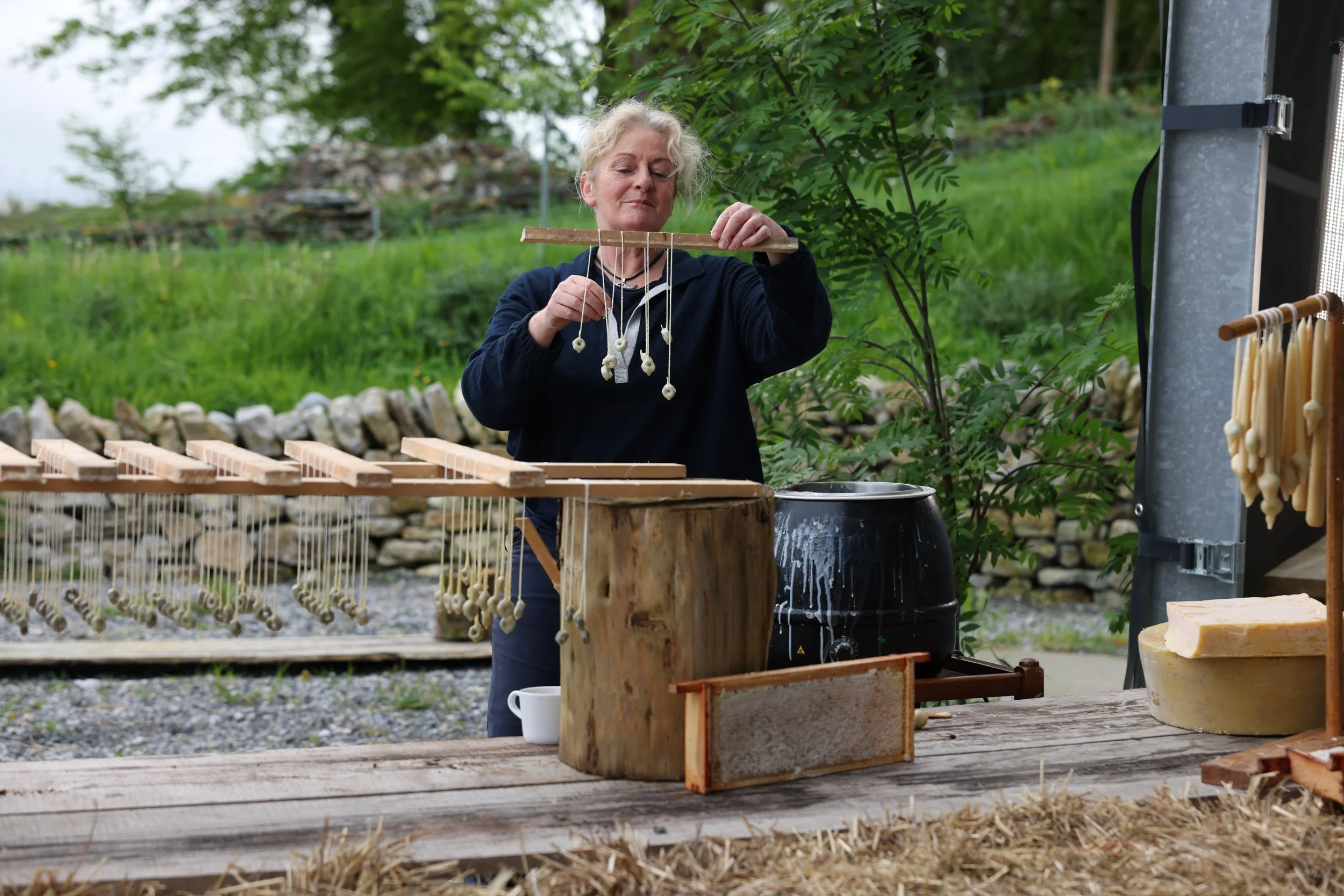
Martina Hamilton Jewelry, Sligo
In Sligo, jewelry designer Martina Hamilton creates work shaped by the coastline, natural forms, and cultural landscape of Ireland's northwest. Time in the studio offers guests a closer look at how those influences are translated into form, texture, and wearable jewelry.
Rather than encountering only the finished collections, guests hear from Martina about the ideas and decisions behind the work. The visit connects the jewelry to the place where it was conceived, revealing how observation of landscape can become part of the design process.
The experience illustrates how craft often begins with observation. The textures of stone, the movement of waves, and the changing light along Ireland's western coast can find their way into a piece through shape, texture, and line.
For guests, meeting the artist brings another layer of meaning to the work. Understanding the inspiration behind a piece creates a connection that extends far beyond what could be experienced by simply viewing it in a shop.
These four profiles offer only a glimpse of the people guests meet throughout the Ireland Artisan Tour. Together, they show how pottery, jewelry, woollen textiles, and oyster farming remain connected to individual lives, family knowledge, regional landscapes, and skills practiced over time.
Why Meeting the Maker Changes the Trip
Many travelers remember beautiful landscapes long after they return home. On the Ireland Artisan Tour, they also remember the people.
Meeting makers, farmers, and producers in the places where they work connects each object, material, and taste to the person and place behind it. A wool throw becomes connected to a family's six-generation history. A piece shaped from clay recalls time spent with Brenda McGinn at Busy Bee Ceramics. An oyster tasted along the Wild Atlantic Way carries the story of Aisling Kelly Hunter's family, the coastal waters, and the work behind its cultivation. A piece of jewelry reveals how Martina Hamilton translates Ireland's Atlantic coastline into form and texture.
These encounters stay with travelers because they make room for conversation, close observation, and shared curiosity rather than treating each destination as another stop to complete.
The smaller group format also makes these visits feel relaxed and personal. Guests have time to observe details, ask thoughtful questions, and understand how each studio, farm, and family business works without feeling hurried.
That sense of connection defines Made With Love's approach to small-group cultural travel. The itinerary is carefully designed around working studios, farms, and family-run businesses where craftsmanship and regional knowledge remain part of everyday life. Guests experience Ireland through the people who work with its wool, clay, coastal waters, natural forms, and inherited traditions.
Rather than focusing only on famous landmarks, the journey invites travelers into places where heritage is still practiced, shared, and carried forward.
Frequently Asked Questions
Do we get to meet the artisans in person, or just watch?
Yes. Guests meet the makers, farmers, and producers in person at working studios, farms, mills, and other locations along the itinerary. Depending on the visit, the experience may include conversation, a demonstration, a guided tour, a tasting, or a hands-on activity. Each stop is designed to help travelers understand the person, process, and place behind the work rather than simply observe from a distance.
Can we buy pieces directly from the artisans?
Some studios, mills, and galleries may have pieces available for purchase during the visit. Availability varies by artisan, location, and tour date, so guests should not assume that every stop includes an opportunity to shop.
Is this trip a good fit for travelers who are not especially interested in crafts?
Yes. While craftsmanship is central to the itinerary, the journey is also about Ireland's culture, family traditions, local history, landscape, food, and the people who give each place its character. Guests do not need prior knowledge of art or craft to enjoy it. Curiosity and a willingness to listen, ask questions, and hear people's stories matter far more than any technical background.
See the Full Ireland Artisan Tour Itinerary
See how pottery, jewelry, oyster farming, harp-making, beekeeping, and woollen textiles shape the journey from one region to the next. View the full Ireland Artisan Tour itinerary for departure dates, accommodations, daily experiences, and booking details.